Everything is connected

The listening library.

Search all 112 entries. Follow a question across sound, instruments and musical ideas.

112 results
Sound & vibration

A sound begins with a vibration

Follow energy from something moving to something you can hear.

Read more
Sound & vibration

Sound travels; air mostly stays nearby

Separate a travelling pressure pattern from the local motion that carries it.

Read more
Sound & vibration

Frequency: count the cycles

Understand the number behind a note without needing to read music.

Read more
Sound & vibration

Amplitude: how large is the change?

Distinguish signal size from pitch and from the experience of loudness.

Read more
Sound & vibration

Wavelength connects pitch to space

A frequency becomes a physical distance once you specify wave speed.

Read more
Sound & vibration

Phase: where a cycle is now

Find out why equal-frequency waves can reinforce or cancel.

Read more
Pitch & listening

Pitch is a perception, frequency is a measure

Why the number in the lab and the note you hear are closely related, but different.

Read more
Pitch & listening

An octave doubles the frequency

Explore a useful relationship between registers without treating them as identical sounds.

Read more
Pitch & listening

What does A4 actually mean?

Read the site’s note labels and understand the assumptions behind them.

Read more
Pitch & listening

Decibels describe ratios

Learn why a small-looking number can represent a large change in a signal.

Read more
Pitch & listening

Equal level is not always equal loudness

Make fairer listening comparisons by separating measurements from impressions.

Read more
Pitch & listening

What a listening experiment can tell you

Separate the model’s output from the limits of ears, devices and browser playback.

Read more
Timbre & spectra

The sine wave: one frequency at a time

Meet the simplest steady signal used to build and compare sounds.

Read more
Timbre & spectra

Many simple waves, one complex sound

See how adding frequency components changes the shape inside a repeating cycle.

Read more
Timbre & spectra

Harmonics: a family of whole-number multiples

Connect repetition, instrument colour and the frequencies inside a single note.

Read more
Timbre & spectra

Overtones, partials and harmonics

Three related words that do not mean quite the same thing.

Read more
Timbre & spectra

A spectrum shows what is inside a sound

Read frequency and level without mistaking a chart for the entire listening experience.

Read more
Timbre & spectra

Why the same note can sound different

Connect spectral balance and timing to the identity of a sound.

Read more
Resonance

Resonance: where a system responds strongly

Why an instrument’s body or air column can favour particular frequencies.

Read more
Resonance

Standing waves: patterns that fit

See why boundaries select a sequence of resonant modes.

Read more
Resonance

Why a shorter string plays higher

Separate the effects of length, tension and mass on an ideal vibrating string.

Read more
Resonance

An air column has boundaries too

Compare ideal open and closed pipes, then see where real wind instruments depart.

Read more
Resonance

Damping decides how long a sound lasts

Follow stored vibration as energy leaves a resonator.

Read more
Resonance

Formants: broad emphasis in a spectrum

Understand how a resonating shape can colour many different pitches.

Read more
Envelopes & instruments

The first instant changes the whole sound

Hear how a note’s onset influences articulation and apparent identity.

Read more
Envelopes & instruments

Listen to how a note fades

Separate a synthetic decay control from the richer fading of an instrument.

Read more
Envelopes & instruments

Holding a note is different from ending it

Read sustain and release as separate parts of a sound’s timeline.

Read more
Envelopes & instruments

One string, two ways to give it energy

Why a plucked and bowed string can behave differently even at the same pitch.

Read more
Envelopes & instruments

Turning breath into a repeating sound

Compare the feedback mechanisms that power wind instruments.

Read more
Envelopes & instruments

A strike and a scrape excite different possibilities

Follow contact, modes and losses through percussion-like sound production.

Read more
Intervals & harmony

An interval is a relationship between notes

Connect musical distance to frequency ratio, sequence and register.

Read more
Intervals & harmony

Consonance has a context

Separate acoustic interaction, musical stability and personal preference.

Read more
Intervals & harmony

A scale is a way to organize pitches

Understand a selected pitch collection without mistaking it for all of music.

Read more
Intervals & harmony

Major and minor: change the relationships

Explore a familiar distinction without reducing musical emotion to a formula.

Read more
Intervals & harmony

A chord is more than a stack of buttons

Hear how notes interact and how a harmonic framework organizes them.

Read more
Intervals & harmony

The same chord can occupy different spaces

Move notes between registers and hear why placement matters.

Read more
Tuning

Twelve equal steps around an octave

Understand what equal temperament keeps consistent and what it changes.

Read more
Tuning

Just ratios: make selected partials meet

Hear a precise interval choice while keeping its musical scope visible.

Read more
Tuning

Build a tuning from fifths

Follow repeated 3:2 relationships and find out why the circle does not close exactly.

Read more
Tuning

Cents put small tuning differences on one scale

Compare ratios across registers using an additive interval unit.

Read more
Tuning

Two nearby notes make a slower pulse

Hear a frequency difference become an audible change in amplitude.

Read more
Tuning

Every tuning choice keeps some relationships

Compare what a system is designed to do before asking which is best.

Read more
Rhythm

The pulse is your recurring reference

Keep a steady beat while the sounds around it change.

Read more
Rhythm

Rhythm is a pattern of events and spaces

Hear how changing onset positions can transform a phrase without changing its pulse.

Read more
Rhythm

Meter groups the beats

Hear the difference between a steady pulse and its recurring organization.

Read more
Rhythm

Put smaller steps inside a beat

Compare two, three and four equal cells while holding the pulse steady.

Read more
Rhythm

Make an expectation and lean away from it

Hear why an offbeat matters only against an established pattern of beats.

Read more
Rhythm

Two regular patterns can share one span

Use a common timeline to understand two-against-three.

Read more
Rooms & space

A reflection is another arrival

Follow the longer route that sound takes after meeting a boundary.

Read more
Rooms & space

A room keeps sounding after the source stops

Distinguish many lingering reflections from the decay of the source itself.

Read more
Rooms & space

Where sound energy goes at a surface

Understand why reducing reflections is different from blocking sound transmission.

Read more
Rooms & space

Why bass changes when you move

Relate room dimensions to low-frequency standing patterns.

Read more
Rooms & space

When a reflection becomes a second event

Connect extra travel distance, delay and the perception of repetition.

Read more
Rooms & space

Two channels are a set of spatial clues

Understand level, timing and playback before treating left and right as a map.

Read more
Recording & signals

A digital waveform is a timed sequence of numbers

Separate taking samples in time from storing their amplitudes.

Read more
Recording & signals

Half the sample rate is an important boundary

Understand the assumptions behind faithful reconstruction.

Read more
Recording & signals

When different frequencies leave the same samples

Hear a high input fold into a lower apparent frequency in a declared teaching model.

Read more
Recording & signals

Bit depth measures amplitude choices

Understand quantization without confusing it with sample rate or loudness.

Read more
Recording & signals

When a signal runs out of headroom

See why flattening peaks changes a waveform rather than merely limiting its loudness.

Read more
Recording & signals

A filter changes a signal’s frequency balance

Connect electronic processing to resonators, timbre and anti-aliasing.

Read more
Plucked strings

Acoustic guitar

A plucked string needs a bridge, a responsive body and moving air to become a room-filling sound.

View study
Strings & electronics

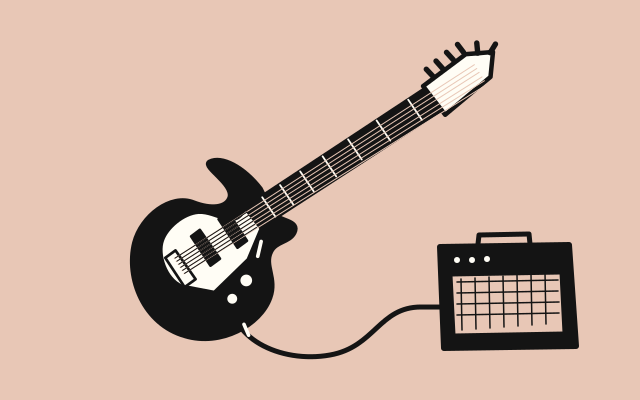
Electric guitar

A magnetic pickup turns a moving string into a signal, and the amplifier becomes part of the instrument.

View study
Bowed strings

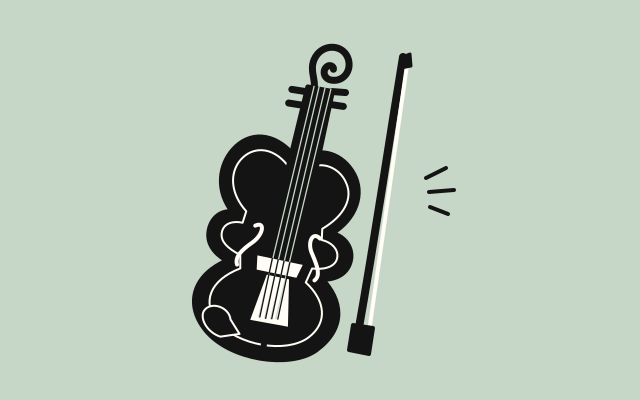
Violin

The bow continually supplies energy; the bridge and body determine how that energy reaches the air.

View study
Struck strings

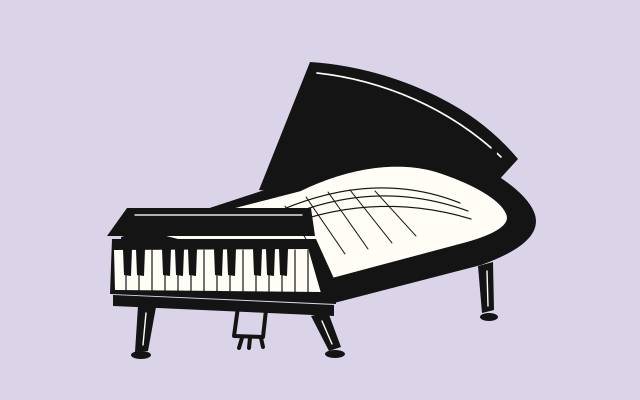
Piano

A brief hammer strike starts a complex event involving strings, bridges, a soundboard and dampers.

View study
Plucked strings

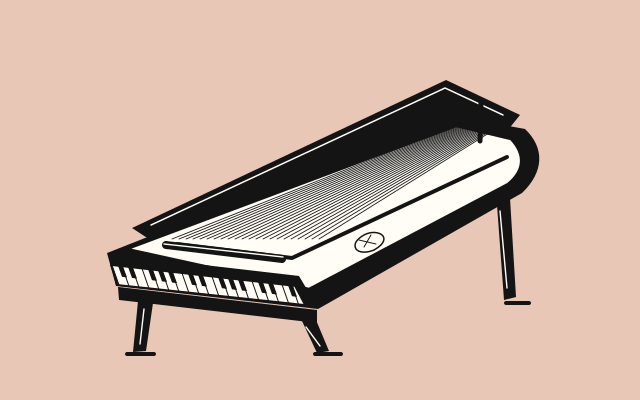
Harpsichord

A keyboard can pluck rather than strike: the mechanism changes how a player shapes each phrase.

View study
Plucked strings

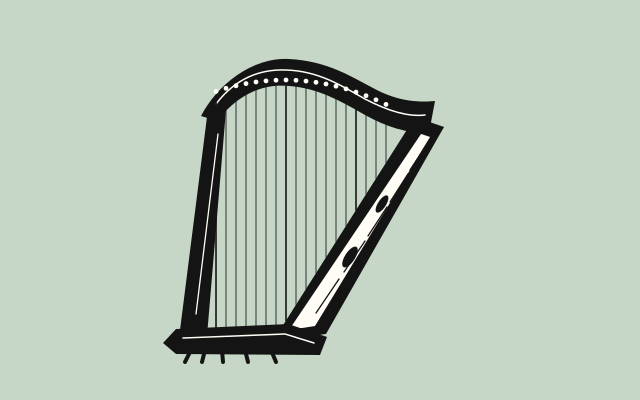
Harp

Separate plucked strings can ring together, making the end of one note part of the beginning of the next.

View study
Air jets

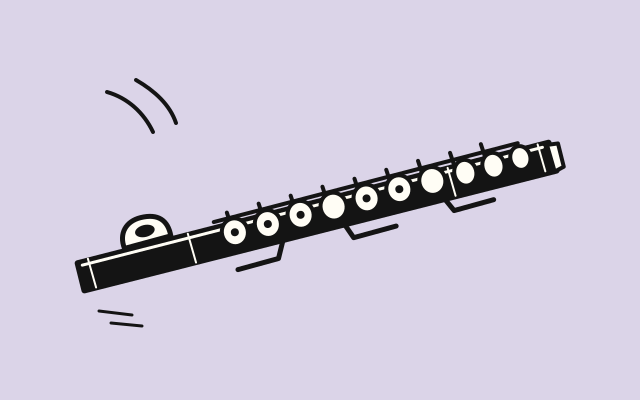
Flute

A jet of air and a resonating bore cooperate to turn a continuous breath into an oscillating sound.

View study
Air jets

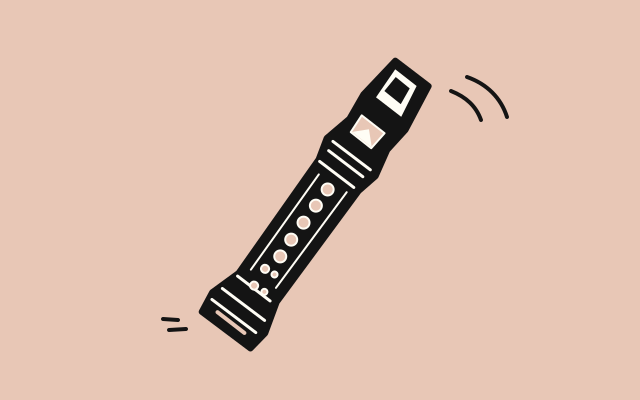
Recorder

A built-in windway directs the jet, leaving breath, fingering and articulation to shape the result.

View study
Air jets

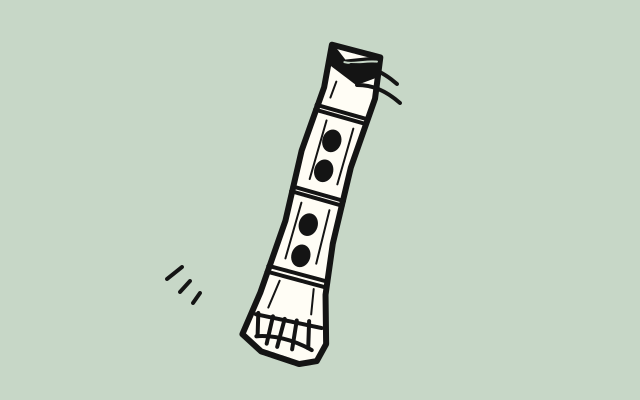
Shakuhachi

On this Japanese end-blown flute, the player’s face is part of the acoustic boundary.

View study
Reeds

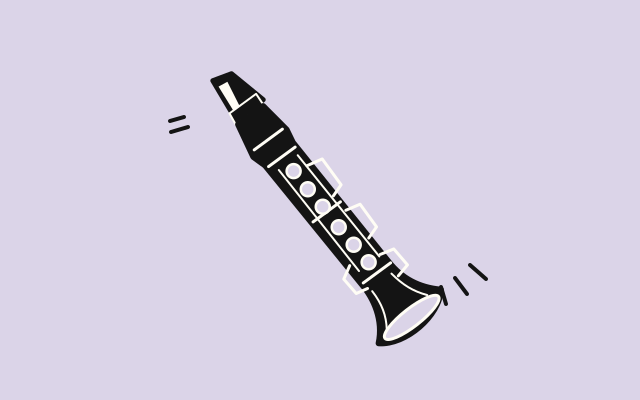
Clarinet

A flexible reed and nearly cylindrical bore form a feedback system with a distinctive low-register pattern.

View study
Reeds

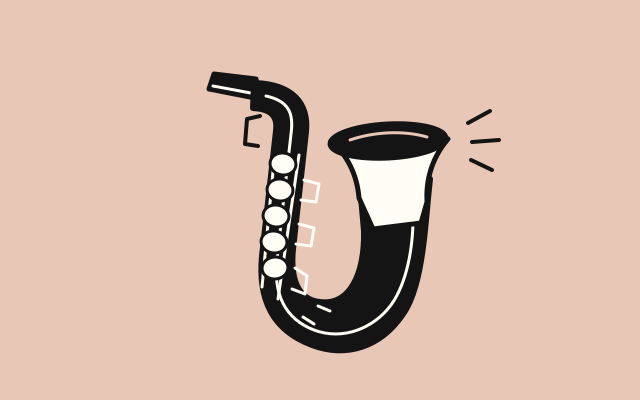
Saxophone

A single reed can drive a conical bore quite differently from a clarinet’s nearly cylindrical one.

View study
Reeds

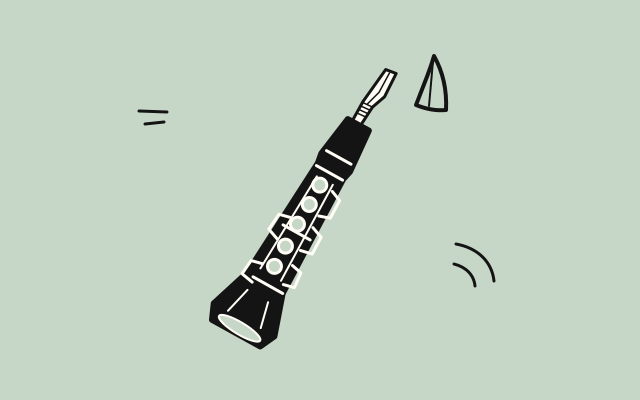
Oboe

Two flexible reed blades regulate airflow into a conical bore, producing a strongly shaped periodic flow.

View study
Lip reeds

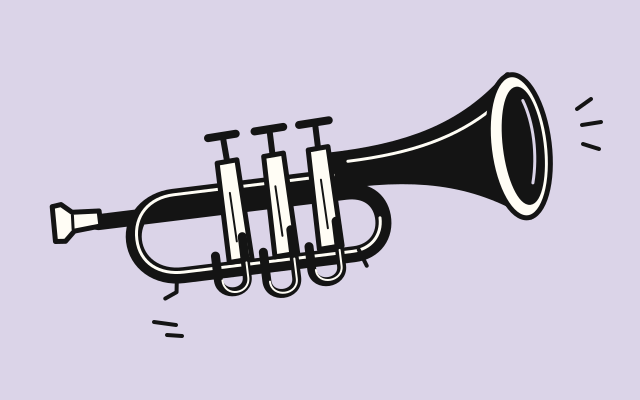
Trumpet

Vibrating lips and a shaped air column cooperate; valves change the available resonance pattern.

View study
Lip reeds

Trombone

A sliding acoustic path makes length a continuous performance control rather than a set of button choices.

View study
Air columns

Pipe organ

A keyboard controls wind to selected pipes; pipe families can use either air jets or vibrating reeds.

View study
Membranes & percussion

Snare drum

A struck head, a second head and rattling snares combine a resonant event with a noisy component.

View study
Membranes & percussion

Timpani

A membrane and the air around its kettle can organise selected modes into a recognisable pitch.

View study
Bars & percussion

Marimba

A shaped wooden bar and a tuned air resonator cooperate, but they do different acoustic jobs.

View study
Voice

Singing voice

Vocal-fold motion supplies a source, while the changing vocal tract shapes the spectrum that reaches a listener.

View study
Electronic sound

Subtractive synthesizer

An oscillator supplies a rich signal, a filter shapes its spectrum, and an envelope gives the note its time pattern.

View study
Timbre & spectra

Build a sound

One note. Many possible colours. Shape the harmonics and hear the waveform become a sound of your own.

Open lab
Timbre & spectra

Same pitch, different shape

Compare a smooth sine with finite approximations of triangle, square and sawtooth waves.

Open lab
Pitch & listening

When two notes almost agree

Let a second tone drift away from the first. Follow the slow swell of interference into a wider interval.

Open lab
Envelopes & instruments

The beginning changes everything

Give an unchanged harmonic recipe a sharp strike, a gentle entrance or a lingering release.

Open lab
Resonance

A length becomes a note

Shorten an ideal string or air column and inspect which resonant frequencies can fit.

Open lab
Intervals & harmony

Move the chord, change the space

Keep a triad’s identity while spreading its notes or moving the whole chord into a new register.

Open lab
Tuning

What does “in tune” mean here?

Listen to three precise ways of placing a major third, perfect fifth or octave above a fixed root.

Open lab
Rhythm

Keep the pulse. Move the rhythm.

Build a short pattern on a steady pulse. Change the grouping, subdivisions and accents without losing your place.

Open lab
Sound & vibration

Add a wave. Lose the sound.

Slide two equal waves past one another and watch their sum grow, shrink and cancel.

Open lab
Recording & signals

When samples tell another story

Sample a sine wave too slowly and a different frequency can fit the same sample points.

Open lab
Pitch & listening

Pitch and loudness: two different questions

A note can rise without growing louder, or grow louder without rising. Separate the repetition rate from the strength of the signal.

Read more
Timbre & spectra

Waveform and spectrum: one sound, two views

The waveform shows how a signal changes through time. The spectrum shows how its components are distributed across frequency.

Read more
Timbre & spectra

Harmonic and inharmonic: regularity inside a sound

Compare frequency components that line up as whole-number multiples with components that do not. This describes structure, not artistic quality.

Read more
Envelopes & instruments

Plucked and bowed: one string, different energy

A pluck releases stored energy. A bow can keep supplying it. Compare the life of a note as well as its spectrum.

Read more
Resonance

Open and stopped pipes: the boundary changes the note

Two cylindrical air columns of the same length can have different lowest resonances because their ends impose different conditions.

Read more
Intervals & harmony

Close and open voicing: the same chord, rearranged

Keep a chord’s note classes while changing their registers. Listen to how spacing changes texture without changing the basic chord label.

Read more
Tuning

Equal temperament and just ratios: what stays fixed?

Compare a reusable grid of equal semitones with selected simple ratios above a chosen root. Each solves a different practical problem.

Read more
Pitch & listening

Beating and roughness: from pulses to texture

Two nearby tones can swell slowly or acquire a rapid, grainy interaction. Distinguish a calculable difference frequency from a listener’s perceptual description.

Read more
Rhythm

Pulse and rhythm: the clock and the pattern

A repeating reference can continue beneath a changing pattern of events. Separate tempo from how notes occupy time.

Read more
Rhythm

On the beat and across it: hearing syncopation

An event gains rhythmic meaning from the pattern around it. Compare where an accent falls against a steady metrical reference.

Read more
Rooms & space

Echo and reverberation: repetition or a trailing room?

Both involve reflected sound. Compare a distinguishable repeat with many overlapping reflections that extend a sound’s decay.

Read more
Recording & signals

Aliasing and clipping: two different limits

One loses frequency identity during sampling. The other changes amplitudes that exceed a permitted range. Diagnose them separately.

Read more
Start here

Your first sound, under a microscope

Begin with a single tone. Learn to connect what you hear to a repeatable change you can see and describe.

Start journey
Timbre & spectra

Why the same note can sound different

Build a tone from components, then discover why its beginning and ending matter as much as its static recipe.

Start journey
Envelopes & instruments

How energy becomes an instrument’s voice

Follow a musical note from its excitation into a resonator and out through its decay.

Start journey
Tuning

Tuning with your ears and a few numbers

Start with slow beats, reach exact ratios, and discover why one useful interval does not solve every tuning problem.

Start journey
Intervals & harmony

Make room inside a chord

Build a small harmony, then change its register and spacing without losing track of its notes.

Start journey
Rhythm

Keep the pulse. Change the pattern.

Compose a tiny original rhythm, then reshape it through subdivision, grouping and anticipation.

Start journey
Sound & vibration

What happens when waves meet?

Follow superposition from a fixed phase offset to moving interference and audible beating.

Start journey
Rooms & space

When the room joins the music

Trace direct sound, reflections and decay, then use those distinctions to explain clarity and spaciousness.

Start journey
Recording & signals

From a wave to numbers and back

See what a digital signal represents, where aliasing comes from, and why amplitude overload is a different issue.

Start journey
Listening practice

Become a better listening experimenter

Learn to make small, fair comparisons and say precisely what the results do and do not establish.

Start journey