The harmonic laboratory
Build a sound
One note. Many possible colours. Shape the harmonics and hear the waveform become a sound of your own.
Enable JavaScript for interactive controls and synthesized sound. Default model: 220 Hz harmonic-grid base · 4 active harmonics. The grid spacing stays 220 Hz. Removing low components can change perceived pitch; the grid base need not be the sounding fundamental. Your harmonic recipe. The eight editable component strengths below. Choose an instrument-inspired starting point, then make it your own. Frequencies and note timing follow the controls; only the source recipe changes. Normalization uses the same bounded nominal RMS policy, not a perceptual loudness match.
Default model values
| Component | Frequency | Peak amplitude | Phase |
|---|---|---|---|
| 1 | 220.00 Hz | 0.1964 | 0° |
| 2 | 440.00 Hz | 0.0982 | 0° |
| 3 | 660.00 Hz | 0.0491 | 0° |
| 4 | 880.00 Hz | 0.0236 | 0° |
Real musicians · original recordings
One note. Two instruments.
Which note has a sharper start? Listen closely to the first moment of each recording.
Nominal 440 Hz
Flute first, then Violin.
Choose instruments
About these two sounds
Flute
A real flute played without vibrato. Listen to the airy onset and the sustained tone.
Explore fluteViolin
A real violin bowed on the A string. Listen to the friction in the attack and the sustained upper components.
Explore violinPlay individual recordings
Flute · A4
B♭ clarinet · A4
Violin · A4
B♭ trumpet · A4
Piano · A4
Marimba · A4
Two-second excerpts, level-matched for comparison. Natural pitch differences are preserved.
Recording credits and preparation
Recordings by Lawrence Fritts and the University of Iowa Electronic Music Studios. View the collection and its reuse terms ↗
- Flute ↗
- Sonja Feig · April 2000 (day not listed) · mf (mezzo-forte)
- Flute.nonvib.mf.B3B4.aiff · Estimated pitch 442.1 Hz
- Excerpt 28.295011–30.295011 s of the source; 2.000 s duration. Mono source retained. 44,100 Hz, 16-bit PCM WAV; linear 3 ms onset and 30 ms ending fades. Constant gain +5.36 dB, targeting −23 dBFS RMS over active 20 ms frames within 30 dB of the loudest frame; −3 dBFS peak ceiling. Result: -23.00 dBFS active RMS, -14.54 dBFS peak. No pitch shifting, time stretching, equalisation or dynamic compression. Natural tuning variation is retained; equal RMS does not guarantee equal perceived loudness.
- B♭ clarinet ↗
- Christine Bellomy · 1998-08-03 · mf (mezzo-forte)
- BbClar.mf.C4B4.aiff · Estimated pitch 439.7 Hz
- Excerpt 46.864989–48.864989 s of the source; 2.000 s duration. Mono source retained. 44,100 Hz, 16-bit PCM WAV; linear 3 ms onset and 30 ms ending fades. Constant gain +2.45 dB, targeting −23 dBFS RMS over active 20 ms frames within 30 dB of the loudest frame; −3 dBFS peak ceiling. Result: -23.00 dBFS active RMS, -16.06 dBFS peak. No pitch shifting, time stretching, equalisation or dynamic compression. Natural tuning variation is retained; equal RMS does not guarantee equal perceived loudness.
- Violin ↗
- Josue Jean-Francois · Not listed · mf (mezzo-forte)
- Violin.arco.mf.sulA.A4B4.aiff · Estimated pitch 437.7 Hz
- Excerpt 2.524989–4.524989 s of the source; 2.000 s duration. Mono source retained. 44,100 Hz, 16-bit PCM WAV; linear 3 ms onset and 30 ms ending fades. Constant gain +12.74 dB, targeting −23 dBFS RMS over active 20 ms frames within 30 dB of the loudest frame; −3 dBFS peak ceiling. Result: -23.00 dBFS active RMS, -12.72 dBFS peak. No pitch shifting, time stretching, equalisation or dynamic compression. Natural tuning variation is retained; equal RMS does not guarantee equal perceived loudness.
- B♭ trumpet ↗
- Aren Van Houzen · 2003-05-16 · mf (mezzo-forte)
- Trumpet.novib.mf.C4B4.aiff · Estimated pitch 437.2 Hz
- Excerpt 78.435011–80.435011 s of the source; 2.000 s duration. Mono source retained. 44,100 Hz, 16-bit PCM WAV; linear 3 ms onset and 30 ms ending fades. Constant gain -7.24 dB, targeting −23 dBFS RMS over active 20 ms frames within 30 dB of the loudest frame; −3 dBFS peak ceiling. Result: -23.00 dBFS active RMS, -13.95 dBFS peak. No pitch shifting, time stretching, equalisation or dynamic compression. Natural tuning variation is retained; equal RMS does not guarantee equal perceived loudness.
- Piano ↗
- Evan Mazunik · 2001-11-05 and 2001-11-27 (individual take date not identified) · mf (mezzo-forte)
- Piano.mf.A4.aiff · Estimated pitch 441.1 Hz
- Excerpt 0.215011–2.215011 s of the source; 2.000 s duration. Stereo folded to mono with equal channel weights, (L + R) / √2, before level adjustment. 44,100 Hz, 16-bit PCM WAV; linear 3 ms onset and 30 ms ending fades. Constant gain +17.59 dB, targeting −23 dBFS RMS over active 20 ms frames within 30 dB of the loudest frame; −3 dBFS peak ceiling. Result: -23.00 dBFS active RMS, -6.20 dBFS peak. No pitch shifting, time stretching, equalisation or dynamic compression. Natural tuning variation is retained; equal RMS does not guarantee equal perceived loudness.
- Marimba ↗
- Andrew Thierauf · 2013-03-20 · mf (mezzo-forte)
- Marimba.yarn.mf.C4B4.aif · Estimated pitch 443.4 Hz
- Excerpt 34.174989–36.174989 s of the source; 2.000 s duration. Source audio header verified as 96,000 Hz, 24-bit stereo; converted to 44,100 Hz without changing playback pitch or speed. Stereo folded to mono with equal channel weights, (L + R) / √2, before level adjustment. 44,100 Hz, 16-bit PCM WAV; linear 3 ms onset and 30 ms ending fades. Constant gain -1.03 dB, targeting −23 dBFS RMS over active 20 ms frames within 30 dB of the loudest frame; −3 dBFS peak ceiling. Result: -23.00 dBFS active RMS, -12.55 dBFS peak. No pitch shifting, time stretching, equalisation or dynamic compression. Natural tuning variation is retained; equal RMS does not guarantee equal perceived loudness.
Listen with a purpose
Try this.
Start with Pure. Add the third harmonic, then the fifth. Keep the fundamental fixed. What changed about the colour, and what stayed stable?
What is happening?
Each slider sets the strength of one sinusoidal component at an integer multiple of the fundamental. The sound is the sum of those components. The waveform shows their combined motion; the spectrum separates them again. Attack and decay shape the amplitude after you start the held note. Restart the note to hear a changed attack.
The model & its limits
An additive, eight-partial teaching synthesizer. It does not model a complete instrument, noise, body resonances, or time-varying partial envelopes. Instrument choices supply original illustrative harmonic recipes, not measured spectra or recordings. Normalization targets the same nominal RMS before the envelope, with a peak bound. Equal RMS does not guarantee equal perceived loudness.
The interactive model synthesizes sound locally. Audio begins only after you press a listening button. Stop ends every scheduled voice; leaving or hiding the page stops audio. The numerical table remains useful without listening.
Static waveforms and component spectra are calculated from the current model. During playback, the waveform (except calculated swell, envelope and sampling illustrations) and spectrum come from the same browser audio signal. FFT bins have finite resolution; bars in the static view represent exact model components. A/B uses the same master volume; perceptual loudness is not calibrated.
How real instruments use this
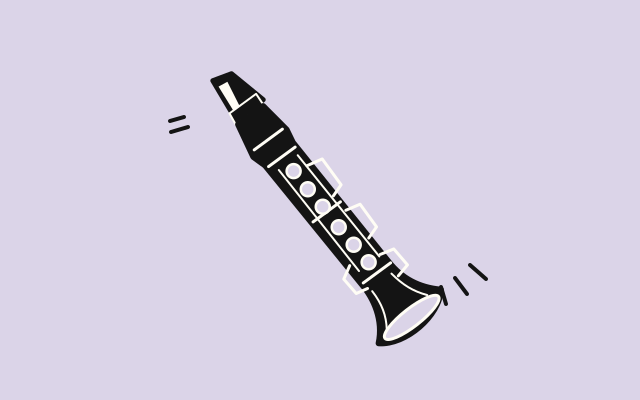
Clarinet
Connect an odd-rich harmonic recipe to the clarinet’s low register, then see why its reed and bore require more than eight fixed sliders.
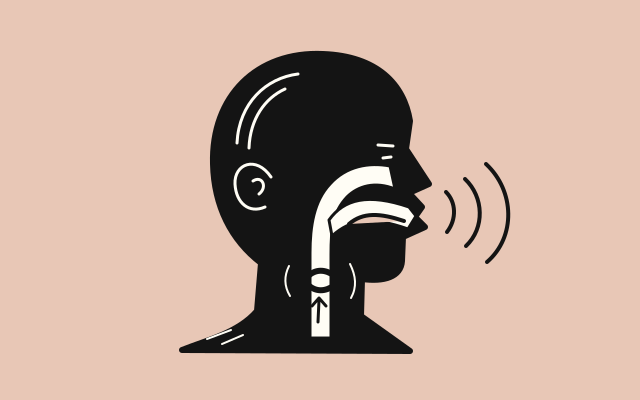
Singing voice
Explore how changing spectral balance can accompany a vowel change. The builder sets harmonic levels directly; it does not calculate a vocal tract.
Sources & further reading
These sources support the explanations and model assumptions. Recording credits are listed in the listening panels and the source register.
- Web Audio API 1.1 — Editor’s Draft ↗W3C Web Audio Working Group · 2026-11-06 (work in progress)
- Web Audio API best practices ↗MDN contributors / Mozilla · Undated
- How harmonic are harmonics? ↗Joe Wolfe / UNSW Music Acoustics · Undated
- Periodicity, period, and frequency ↗Chris Donahue / Carnegie Mellon University · 2026
- What is a sound spectrum? ↗Joe Wolfe / UNSW Music Acoustics · Undated
- Scores versus timbre ↗Chris Donahue / Carnegie Mellon University · 2026
- Envelopes ↗Chris Donahue / Carnegie Mellon University · 2026
- Musical sounds and musical signals ↗Joe Wolfe / Sound Musicianship · 2012
- Clipping ↗Chris Donahue / Carnegie Mellon University · 2026
- Time and frequency ↗Chris Donahue / Carnegie Mellon University · 2026
- Amplitude and phase spectra ↗Chris Donahue / Carnegie Mellon University · 2026
- Additive synthesis ↗Chris Donahue / Carnegie Mellon University · 2026